











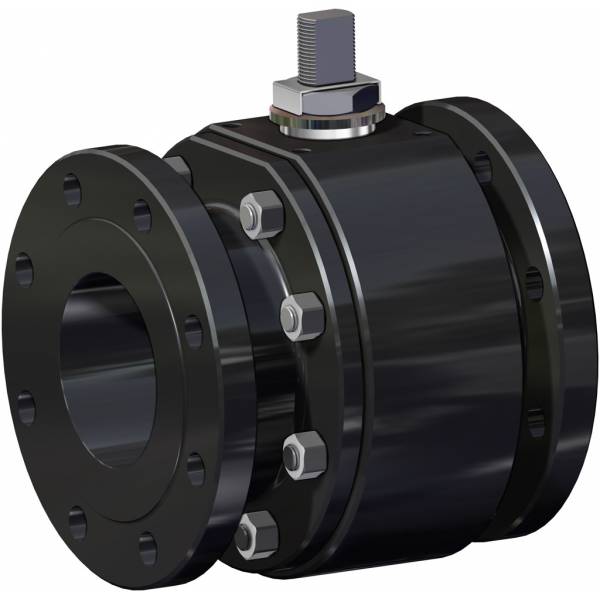
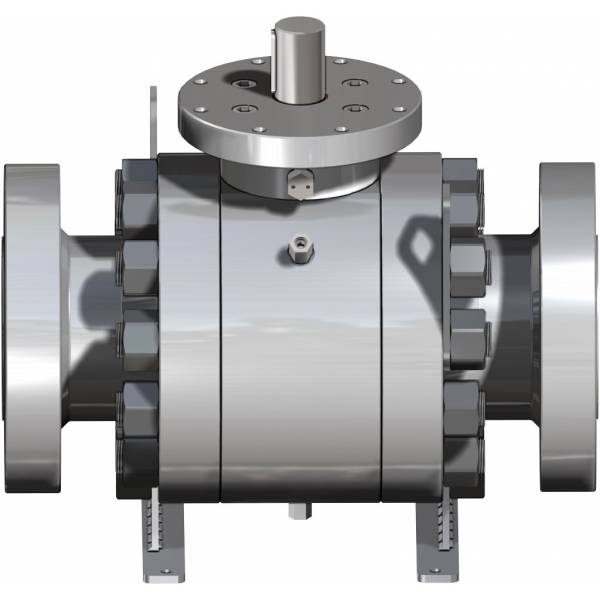
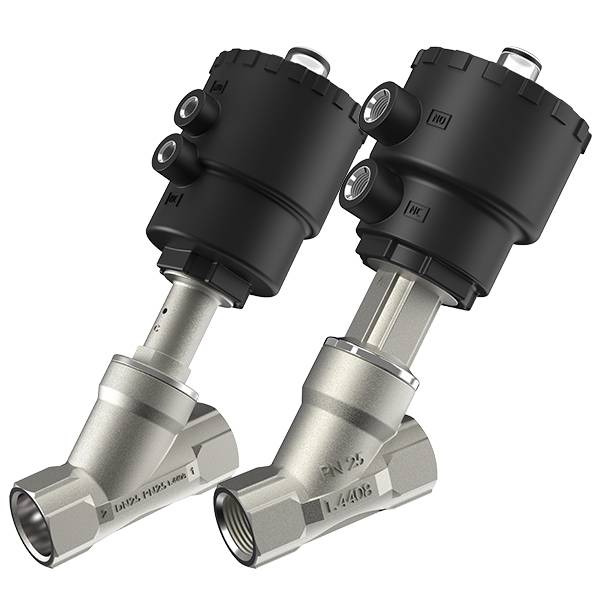

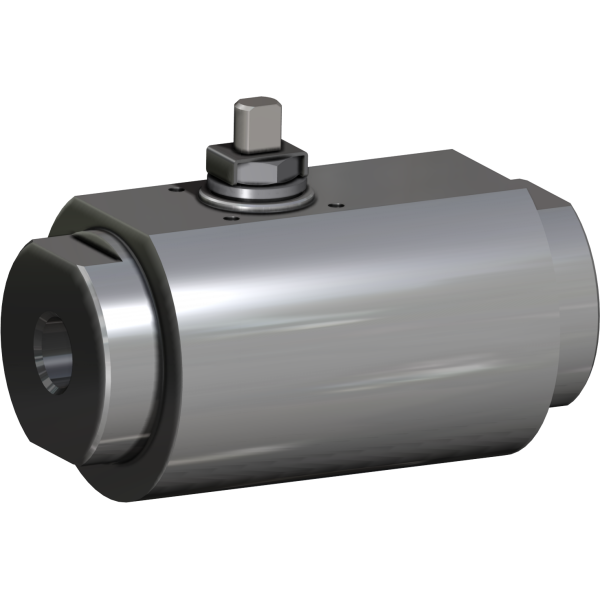

- Angle valves up to 25 bar
- Floating ball valves up to 150 bar
- Trunnion-mounted ball valves up to 400 bar
- High-pressure ball valves up to 700 bar
At OMAL we produce a complete range, from the angle valve at 25 bar up to the high-pressure ball valve at 700 bar. All our hydrogen valves are automatable through pneumatic actuators built in-house.
Our flagship product is H2 INVICTUS, the world's first PN700 ball valve to obtain ISO 19880-3 certification, according to TÜV SÜD (one of the most accredited certification bodies internationally).
The range is completed by five certifications covering every critical node of the hydrogen supply chain: refuelling, transport, functional safety, explosive atmospheres and fugitive emissions.
What does the hydrogen sector mean for OMAL?
Hydrogen is today among the main horizons of the energy transition: a zero-emissions carrier applicable to industry, transport, energy production and storage.OMAL has been producing hydrogen valves for many years, first for traditional industrial applications in which H2 was blended with other gases, today for the new generation of plants that requires high pressures and temperatures.
From traditional industrial hydrogen to the energy transition
In recent years the global energy sector has entered a phase of profound transformation, driven by the urgent need to reduce polluting emissions that increasingly threaten the planet.This context has led to a series of political decisions and short- and long-term strategic choices by individual States. Hydrogen, alongside other alternative energy sources, is receiving growing attention in Europe and worldwide as a zero-emissions carrier applicable across multiple sectors, from heavy industry to mobility, from production to energy storage.
The potential large-scale use of hydrogen has made it necessary to develop specific regulations, codes and standards, capable of taking into account the peculiarities of this gas and the criticalities related to the safety of the systems and plants that handle it. ISO 19880-3is one of the leading examples of these new international standards, defining the safety requirements for valves used in hydrogen gas refuelling stations.
OMAL's experience with hydrogen applications
Hydrogen is not new territory for OMAL. For many years our customers have been using it in established industrial applications, primarily in the production of steel, ceramics and glass.In these processes H2 is blended with natural gasto fuel the processing furnaces. It is a quantitatively marginal use compared to other fuels, but widespread enough to have allowed us to gain a deep understanding of the behaviour of hydrogen and the approach customers take towards a gas with such particular characteristics.
New challenges: high pressures and elevated temperatures
The evolution that the hydrogen market is experiencing today drives the use of H2 to its full potential: no longer as a low-percentage additive, but as a primary energy carrier.This means, however, working at markedly higher temperatures and pressures than traditional applications, which require precise countermeasures, from the selection of specific metallic materials to the design of dedicated seals.
It is precisely on these countermeasures that the difference is played out between a generic industrial valve and the hydrogen valves designed by OMAL.
Complete range of hydrogen valves: from production to refuelling
Our range of hydrogen valves is built to respond to the needs of every critical point in the hydrogen supply chain: from production plants, to compression and storage, all the way to transport and refuelling stations.The pressure range coverage extends from 25 to 700 bar, through four types of hydrogen valves that differ in geometry and operating range.
All valves in the range can be automated through pneumatic actuators produced directly by OMAL.
| Valve type | Nominal pressure |
| Angle valve | up to 25 bar |
| Floating hydrogen ball valve | up to 150 bar |
| Trunnion ball valve | up to 400 bar |
| High-pressure hydrogen ball valve | up to 700 bar |
H2 INVICTUS: our ISO 19880-3 certified hydrogen valve
The H2 INVICTUS hydrogen ball valve represents the top of our range. It is the world's first PN700 ball valve to have achieved ISO 19880-3 certification, issued by TÜV SÜD, one of the most accredited certification bodies internationally.What is ISO 19880-3 certification and why it matters for hydrogen valves
The ISO 19880 standard represents one of the most internationally recognised standards on the safety requirements of all components intended to be used primarily inside hydrogen gas refuelling stations.The manufacturer of hydrogen valves must establish and implement production processes that employ quality control measures capable of ensuring that the product meets the requirements set out in the standard. All this only after passing a series of very rigorous teststhat put product quality to the test.
The tests passed by our pn700 hydrogen ball valve for certification
Our PN700 hydrogen ball valve had to demonstrate its performance against four critical parameters:- Corrosion resistance, that is, the phenomenon known as hydrogen embrittlement
- Electrical conductivity
- Effects related to temperature variations
- Material wear even at high cycle frequencies — up to 102,000 operating cycles
How our materials prevent hydrogen embrittlement
Hydrogen is the smallest molecule that exists and, for this reason, diffuses and permeates easily through many materials. The phenomenon is known as hydrogen embrittlement and is one of the most challenging aspects in designing valves for hydrogen service.To counter it, we have selected specific materials: 316 stainless steel for valve bodies (particularly in stainless steel ball valves), NITRONIC 50 (XM-19) for balls and stems, a proprietary pairing of modified PTFE and DEVLON for seats, and lip seals of our own design for rapid decompression.
316 stainless steel for the valve body
The materials in our H2 range are all sourced from qualified suppliers. The bulk of the demand is for 316 stainless steel, used primarily to manufacture the bodies of our stainless steel ball valves.NITRONIC 50 (XM-19) for ball and stem
For components such as balls and stems we have selected NITRONIC 50, also known as XM-19. It is an austenitic stainless steel that has proven much less susceptible to hydrogen embrittlement than many of the alloys typically in use.Rate “A” seals to ISO 15848-1
For the seats we have developed a specific material configuration that differs from the standard to guarantee an extremely high level of external sealing. This combination is certified Rate “A” to ISO 15848-1, the highest sealing level achievable. It serves to prevent micro-leaks and bypass through the stem packing.Lip seals for rapid decompression
For high-pressure valves we have introduced special lip seals manufactured to our own design, given their particular resistance to rapid decompression phenomena.At which points of the supply chain can our hydrogen valves be applied?
Our valves cover the entire hydrogen supply chain: production, compression, transport and refuelling stations. We handle pure hydrogen, compressed hydrogen and hydrogen in mixtures with other gases.Valves for production and compression
At this time, the bulk of our supplies in the hydrogen sector are for production plants — for example electrolysers — but also for compression. These are the segments of the supply chain where our range of hydrogen valves is most present today.Valves for transport: KRATOS with T-PED certification
For transport and refuelling stations we are still talking about fairly niche applications, although we see good prospects, supported above all by sector certifications.Our KRATOS is certified T-PED to ISO 23826, the regulatory reference for transport.
Valves for refuelling stations: H2 INVICTUS
For refuelling stations the reference valve in our range is, as already noted, H2 INVICTUS, our ISO 19880-3 hydrogen ball valve.Pure, compressed, mixed hydrogen
The types of hydrogen we handle depend on the application, and in practice anything can occur:- pure hydrogen is a requirement often associated with the actual production of hydrogen via the electrolysis process — that is, green hydrogen;
- compressed hydrogen characterises everything regarding its handling: storage, compression and distribution;
- mixtures are used inside production plants for steel, glass or cement, or in gas distribution.
The certifications of our H2 range: ISO 19880-3, T-PED, ATEX, SIL, ISO 15848-1
Our range of hydrogen valves has five certifications: in addition to ISO 19880-3 for H2 INVICTUS (refuelling), we have achieved T-PED to ISO 23826 certification for KRATOS (transport), ISO 15848-1 for fugitive emissions, SIL certification for functional safety, and ATEX certification for explosive atmospheres.| Certification | Product and application |
| ISO 19880-3 | H2 INVICTUS — refuelling |
| T-PED to ISO 23826 | KRATOS — transport |
| ISO 15848-1 | Fugitive emissions (H2 range) |
| SIL | Functional safety (H2 range) |
| ATEX | Explosive atmospheres (H2 range) |
FAQ: Frequently Asked Questions about hydrogen valves
What makes a valve suitable for hydrogen service?
Valves for hydrogen service require metallic materials resistant to embrittlement (such as 316 stainless steel and NITRONIC 50) paired with seals capable of preventing stem micro-leaks and withstanding rapid decompression.The hydrogen valves in our H2 range are designed according to these criteria.
What is hydrogen embrittlement?
Hydrogen embrittlement is the phenomenon by which hydrogen — the smallest molecule that exists — diffuses and permeates easily through many metallic materials.To counter it in our hydrogen ball valves we have selected NITRONIC 50 (XM-19), an austenitic stainless steel much less susceptible to this phenomenon than common alloys.
What does ISO 19880-3 certification mean and how does it apply to hydrogen valves?
ISO 19880-3 is one of the most internationally recognised standards on the safety requirements of components intended for hydrogen gas refuelling stations.An ISO 19880-3 certified hydrogen valve has passed rigorous tests on corrosion resistance, electrical conductivity, temperature variations and wear.
What pressures do OMAL hydrogen valves cover?
Our range of hydrogen valves covers a range from 25 to 700 bar: angle valves up to 25 bar, floating ball valves up to 150 bar, trunnion ball valves up to 400 bar and high-pressure hydrogen ball valves up to 700 bar.The top of the range is the H2 INVICTUS hydrogen ball valve, certified to ISO 19880-3.
What is Rate “A” of the ISO 15848-1 standard?
Rate “A” of ISO 15848-1 is the highest sealing level achievable provided for by the standard on fugitive emissions, that is, the standard that evaluates the tightness of the stem sealing system.The seals of our hydrogen ball valves achieve this level thanks to the proprietary pairing between modified PTFE and DEVLON.
Powered by Froala Editor